Stage 3 - Living for Sustainability
Science/Geography
Program Overview
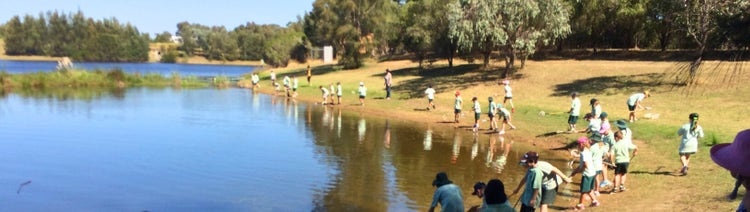
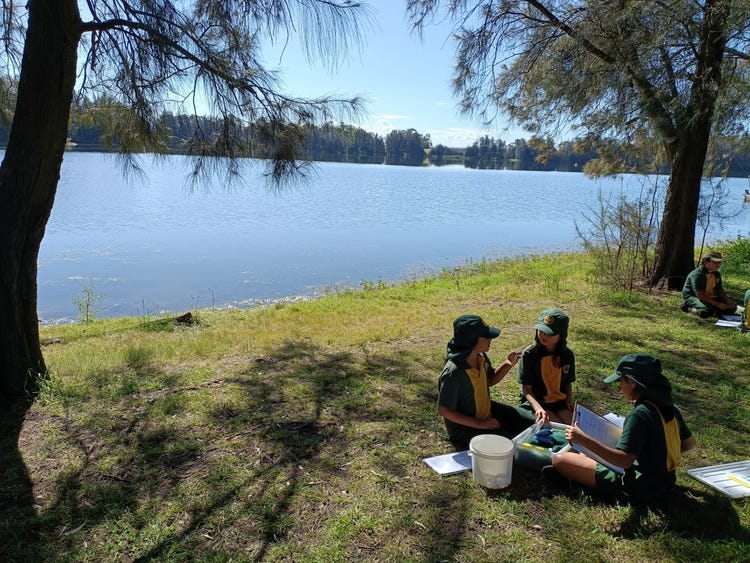
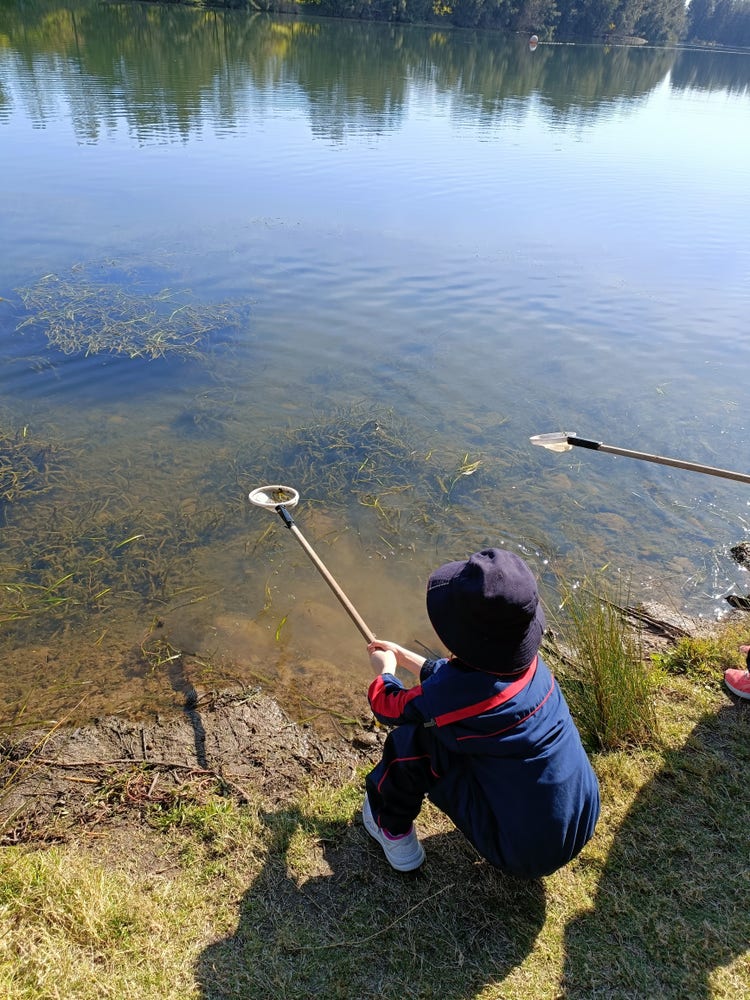
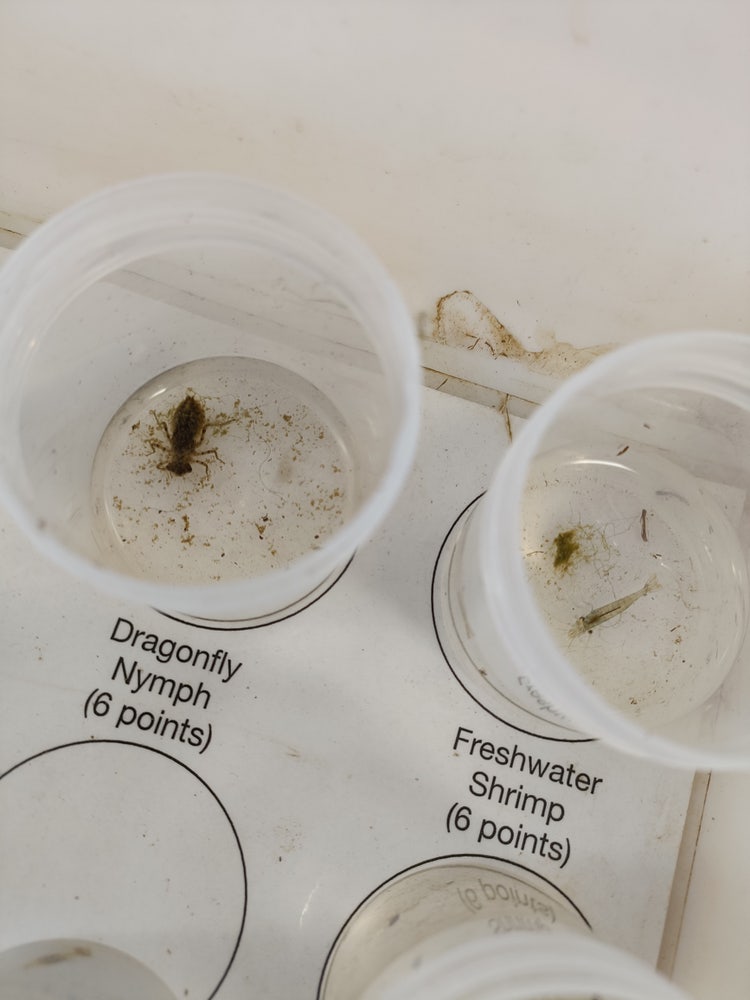
Students are guaranteed to be involved in a number of engaging and hands-on experiences during the course of the day. Through these students will further develop their knowledge and understanding, fieldwork and group work skills. Students investigate a local aquatic ecosystem to measure both living and non-living indicators of water quality. Our key inquiry questions are ‘How healthy are the lakes’ and ‘Can I swim here’. Geographical tools are utilsed. Management of the lakes is explained to lessen the impacts of flooding (environmental event).
Food webs, adaptations, life cycles and impact of introduced species are explored. Students are left with thoughts for a post visit activity which highlights sustainable management practices of Penrith Lakes. Students also learn about the local Aboriginal people’s history and culture relevant to Penrith Lakes
Focus
Geography Focus Area
Stage 3: Geographical information is used to plan for sustainable futures
Sub-strand - People organize and manage places using geographical information and cultural knowledges and practices that care for country
Science Focus Area
Stage 3: Knowledge of our world and beyond inspires sustainable solutions
Sub-strands -
- Living things may change over millions of years, in response to their environments.
- A fixed amount of useable matter makes up all the material on Earth
Program Activities
Key Syllabus Outcomes
Geography K-6 HSIE - Geography (2024)
- HS3-GEO-01 examines how people organise, protect and sustainability use the environment, using geographical information.
- HS3-ACH-01 describes Aboriginal Knowledges and Practices that care for Country
Science and Technology K-6 Science (2024)
- ST3-SC1-01 uses evidence to explain how scientific knowledge can be used to develop sustainable practices
- ST3-PQU-01 poses questions to identify variables and conducts fair tests to gather data
- ST3-DAT-01 interprets data to support explanations and arguments
Key Content
- Observe, measure, collect and record geographical information to explain how places are organised
- Research and explain how people and agencies manage places where environmental events occur eg, rain
- Propose strategies to manage a local place where environmental events occur - post activity
- Observe behavioural and structural adaptations of plants and animals, and suggest how these may help them survive in their environments
- Interpret a food web that describes the flow of matter and energy between plants and animals in an ecosystem
- Identify and describe how the loss or introduction of plants and animals effects an Australian ecosystem.
- Describe how local Knowledges of Country influence Aboriginal Peoples’ management of environments
- Create and communicate a plan to implement a sustainable practice in a community that address an identified environmental concern eg management of a water environment, reduction of pollution - post activity